
Harvesting Intelligence
Data-Driven Farming Is Redefining Agriculture Through Insight, Precision, and Sustainability
The New Era of Agricultural Intelligence
Farming has entered an age of transformation guided not only by machinery and biology but by information itself. Data-driven farming, also known as digital or precision agriculture, represents the next frontier in food production. It is built on the idea that every decision in farming, from planting to harvesting, can be improved through accurate data collection, analysis, and interpretation. In the past, farmers relied primarily on intuition, tradition, and observation. Today, they harness digital tools that measure soil health, climate conditions, crop growth, and market trends in real time. These insights allow them to make decisions that are timely, efficient, and tailored to the unique conditions of their land.
The integration of data analytics into agriculture marks a profound shift from reactive to proactive management. Instead of waiting for problems such as pest infestations or nutrient deficiencies to appear, farmers can predict them before they occur. Sensors, satellites, and digital platforms transform the farm into an ecosystem of connected devices. The result is an agricultural system that learns, adapts, and evolves continuously. Data becomes a new kind of fertilizer, nourishing not the soil directly but the decisions that sustain it. In a world facing climate uncertainty and growing demand for food, data-driven farming stands as a bridge between technology and tradition, enabling progress rooted in knowledge.
From Observation to Optimization: The Evolution of Data in Agriculture
Data has always existed in agriculture, even before the term became fashionable. Farmers have long observed patterns in weather, soil, and crop cycles to make informed decisions. What distinguishes modern agriculture is the ability to collect, store, and analyze this information at an unprecedented scale. The digital revolution has introduced a new generation of tools that capture precise, continuous, and quantifiable data. Remote sensors measure soil moisture and nutrient levels, while weather stations track local climate variations minute by minute. Satellites and drones provide high-resolution images that reveal crop health and growth anomalies invisible to the human eye.
With these technologies, data moves beyond passive observation to active optimization. Cloud computing and artificial intelligence process vast datasets, transforming raw information into actionable insights. Machine learning algorithms detect correlations and predict outcomes, guiding farmers toward the most effective strategies. Historical yield data, for example, can be combined with weather forecasts and soil composition maps to create predictive models of crop performance. This evolution allows for precision at every stage of farming. Where once a farmer might have relied on experience alone, now digital tools amplify that intuition with empirical evidence. The farm becomes not only a physical space but a digital landscape of data interactions that lead to smarter, more resilient systems.
The Core Components of Data-Driven Farming
At the foundation of data-driven agriculture are several interconnected components that function together to collect and interpret information. The first is sensing technology, which captures environmental and biological data. Soil sensors measure moisture, pH levels, temperature, and nutrient availability. Weather sensors monitor rainfall, humidity, and solar radiation. Crop sensors evaluate chlorophyll content and photosynthetic activity, offering real-time indicators of plant health. Each sensor contributes a piece of the larger puzzle, helping farmers understand the conditions that affect productivity.
The second component is data integration, where information from multiple sources is consolidated into a single platform. Farm management systems allow farmers to view and analyze data through user-friendly dashboards, often accessible via smartphones or computers. These platforms synthesize inputs from sensors, satellites, and manual entries into cohesive visualizations. The third component is analytics, which transforms data into insights. Advanced algorithms identify patterns, correlations, and anomalies that might otherwise go unnoticed. Finally, decision-support systems translate these insights into recommendations, helping farmers determine when to irrigate, fertilize, or harvest. Together, these components create a self-reinforcing system where data flows continuously from observation to action, ensuring that every decision contributes to optimization and sustainability.
Precision Farming and Real-Time Decision Making
One of the defining features of data-driven agriculture is its capacity for precision. Precision farming applies variable rates of water, fertilizer, and pesticides based on data-derived maps of field variability. This approach replaces uniform application with site-specific management, ensuring that each area of the field receives exactly what it needs. Geographic information systems (GIS) and global positioning systems (GPS) make this possible by mapping variations in soil and crop conditions with centimeter-level accuracy. For example, a farmer can use data to identify sections of a field that retain moisture longer than others and adjust irrigation accordingly.
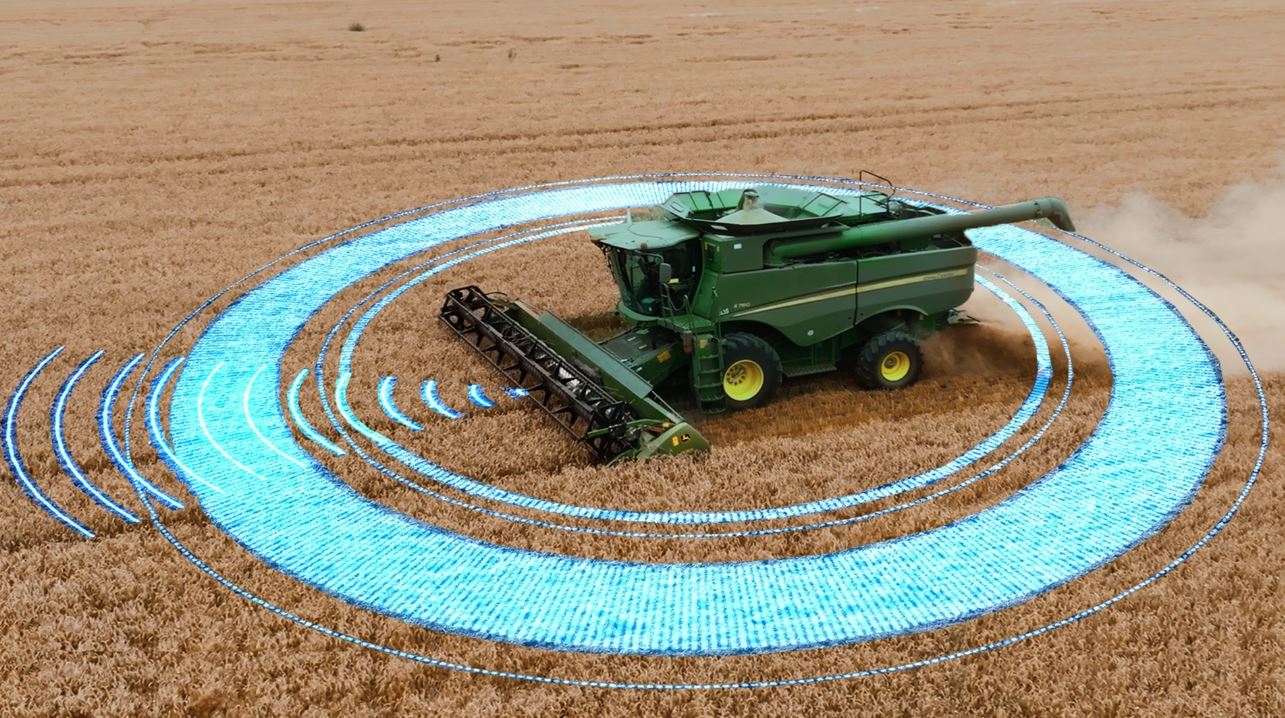
Real-time decision making is another hallmark of data-driven farming. Instead of relying on seasonal or periodic assessments, farmers can monitor their crops continuously and respond instantly to changing conditions. Mobile applications connected to cloud databases allow them to make adjustments from anywhere. Automated irrigation systems, for instance, can activate or shut down based on sensor readings without manual intervention. This immediacy reduces waste, conserves energy, and maximizes yield potential. Precision and timing, guided by data, transform farming from a labor-intensive practice into a finely tuned system of resource management and foresight.
Big Data and Artificial Intelligence in Agriculture
The rise of big data and artificial intelligence represents a new chapter in the evolution of modern farming. Big data refers to the massive volume of information generated daily by farms, machines, and markets. Managing this data requires powerful computing systems capable of processing and analyzing complex variables simultaneously. Artificial intelligence serves as the analytical engine that gives meaning to the data. AI algorithms learn from patterns across different datasets, improving predictions over time. These systems can forecast weather events, detect diseases, or estimate yield potential with remarkable accuracy.
Machine learning applications extend across all levels of agriculture. Image recognition software, for example, can analyze drone or satellite imagery to detect pest infestations early, allowing farmers to target interventions precisely. Predictive analytics combine environmental, genetic, and historical data to identify the best crop varieties for specific soil and climate conditions. AI-driven robots can perform tasks such as weeding, pruning, and harvesting autonomously, guided by data. As these technologies mature, they reduce uncertainty and labor requirements while enhancing efficiency and sustainability. The collaboration between big data and artificial intelligence creates an agricultural ecosystem where knowledge, not guesswork, drives production.
Economic and Environmental Impacts of Data-Driven Agriculture
The adoption of data-driven practices brings profound economic benefits to the agricultural sector. Farmers who leverage digital tools often experience higher productivity, reduced costs, and improved profitability. By applying inputs only where necessary, they save on fertilizers, pesticides, and water. Precision irrigation, for instance, can reduce water consumption by up to half while maintaining or even increasing yield. These efficiencies translate into significant financial savings over time. Moreover, data analytics helps farmers plan better, manage risks, and access new markets through transparent traceability and certification systems.
The environmental impact is equally important. Data-driven farming reduces the ecological footprint of agriculture by promoting sustainable practices. Controlled input use minimizes runoff and soil contamination, protecting nearby water bodies. Better timing of operations reduces carbon emissions from machinery and enhances soil health through minimal disturbance. By monitoring biodiversity and soil microbiology, farmers can maintain ecological balance within their land. On a global scale, these practices contribute to climate resilience and food security. Data-driven systems not only enhance the farmer’s bottom line but also ensure that agriculture evolves in harmony with the planet’s natural systems.
Challenges and Barriers to Adoption
Despite its potential, data-driven agriculture faces several barriers that slow widespread adoption. The first challenge is accessibility. Many smallholder farmers in developing regions lack the infrastructure and resources needed to implement advanced digital systems. Limited internet connectivity, high equipment costs, and lack of technical knowledge restrict participation. Bridging this gap requires investment in digital infrastructure, affordable technology, and education. Collaborative platforms that provide shared access to data and tools can help democratize innovation, allowing smaller farms to benefit from the same insights as large commercial operations.
Data privacy and security represent another major concern. As farms become increasingly digital, they generate sensitive information about land use, production, and market performance. Protecting this data from misuse or unauthorized access is essential to maintain trust among farmers. Interoperability between different platforms also remains a challenge, as competing technologies may not communicate seamlessly. Addressing these issues requires collaboration between governments, private companies, and research institutions. Policies that encourage open standards, ethical data sharing, and digital literacy are vital for ensuring that data-driven agriculture develops inclusively and responsibly.
Social Transformation and the Future of Agricultural Work
The shift toward data-driven farming is not only technological but also social. As farms become more digitized, the nature of agricultural work is changing. Traditional roles that relied on manual labor are giving way to data analysis, system management, and technology oversight. This transformation demands new skills and education programs that prepare workers for the digital farm of the future. Farmers become managers of information as much as cultivators of land. This transition, while challenging, opens new opportunities for youth engagement in agriculture. Digital tools make farming more attractive, dynamic, and connected to global innovation networks.
Rural communities also stand to benefit from the broader economic ripple effects of data-driven agriculture. Increased efficiency and profitability can stimulate local economies through job creation, infrastructure development, and sustainable investment. However, equitable access remains crucial to prevent widening disparities between technologically advanced farms and those left behind. The future of agricultural work will depend on inclusivity and collaboration, ensuring that technology enhances human capability rather than replacing it. Data-driven farming should be viewed not as a replacement for traditional wisdom but as its evolution, integrating generations of knowledge into a framework of intelligent growth.
The Path Forward: Toward a Predictive and Sustainable Food System
The future of data-driven farming lies in its ability to create predictive, adaptive, and resilient agricultural systems. Emerging technologies such as blockchain, the Internet of Things, and quantum computing will deepen the integration of data into every aspect of the food chain. Farms will become living networks that self-regulate based on real-time conditions, communicating seamlessly with supply chains, markets, and ecosystems. Data will enable transparency, allowing consumers to trace food from field to table, reinforcing trust and accountability in global food systems.
However, technology alone cannot ensure success. The foundation of data-driven farming must be built on cooperation, ethics, and sustainability. Farmers, scientists, policymakers, and technologists must work together to align innovation with ecological principles. Data has the power to unite rather than divide, to inform decisions that balance productivity with stewardship. As we move deeper into the digital century, agriculture will continue to evolve from instinct to intelligence, from extraction to regeneration. In this vision, the farm becomes not only a place of production but a hub of knowledge and innovation, where data cultivates both crops and the wisdom to sustain them.